 |
What IS that? |
 |
Plants are amazing things - especially when you pay attention to the
details. Often, I don't see those details until I take a close-up picture
and look at it on my computer screen. So let's have some fun - I will put
interesting bits of close-up photos on this page, and let you guess which
plants are being highlighted. Just use the comment field below to state your
guess. When a correct answer is posted for an image, I'll replace it with a
new one. No prizes - just the glory of being a What's that? winner on
robsplants.com.
Your guess may not appear in the comments section right
away. I moderate page comments, to avoid an onslaught of spam.
The photos below are still in search of an identity:
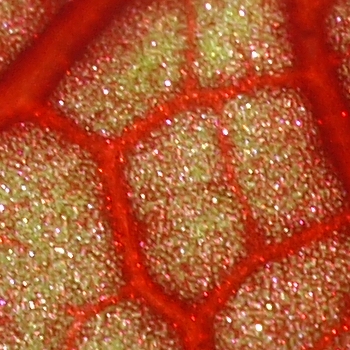
WhatsThat number thirty-four: back-lit lung tissue?
|
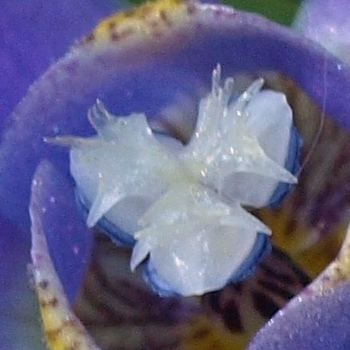
WhatsThat number thirty-five: intricate flowers amid swords
|
Visitors to this page have left the following comments| Kathleen | Jun 03, 2008 | I'm guessing it's a perennial, but what do I know. (I'm a card carrying member of the Mediocre Plant Identifying Group.) Looking forward to finding out.
Yes, it's a perennial. But that doesn't narrow it down much... |
| Iris | Jun 10, 2008 | Could it be Asphodeline?
and the first prize goes to Iris! It is indeed Asphodeline lutea. |
| James Cheshire | Jul 08, 2008 | Leonurus cardiaca
Correct family (of course ;-) but it's not leonurus... |
| Cindy | Jul 20, 2008 | Callirhoe involucrata
Good guess - but no, this purple flower belongs to an annual, whereas callirhoe is perennial... |
| Cindy | Jul 22, 2008 | Corn cockle? It's a purple-flowering self-seeding annual with five petals and hairy stems. I confess I had to use my botany textbook :)
You got it! Agrostemma githago it is. |
| Cindy | Jul 23, 2008 | Echinacea purpurea
Right again! |
| Cindy | Jul 26, 2008 | Lamium album?
Afraid not. Still the right family, still the wrong genus ;-) |
| Cindy | Jul 27, 2008 | Nepeta subsessilis (GRIN)
Grin! Still not quite right :-). You did get the other one right (by e-mail) - that is indeed Asclepias tuberosa. |
| Cindy | Jul 28, 2008 | Not Blephilia hirsuta or Galeopsis bifida, but wow, there is such amazing diversity in the Laminacea! Campanula carpatica?
It's in lamiaceae, for sure (which rules out Campanula). This is a taller-growing plant - its flowers are arranged in clusters around the stem. |
| daan | Jul 31, 2008 | stachys macrantha ?
Another good guess - but alas... |
| Mary Beth | Aug 03, 2008 | #6-Clarkia bottae, Rob?
Absolutely, Mary Beth :-) |
| Cindy | Aug 06, 2008 | Pycnanthemum virginianum
I guess there's just too many plants in lamiaceae... Alas, another miss. |
| Team Cindy | Aug 07, 2008 | Aha! With thanks ALSO to my local County Extension Agent, and a friendly Master Gardener, may we consider the Scutellaria for What's that #2?
Take a look at my brand-spanking new page about skullcaps - nary a fuzzy one to be found! It's about time #2 gets retired - so here's a hint: the genus of this plant sounds like a description of a messy men's room mishap. |
| Team Cindy | Aug 07, 2008 | Paeonia, for What's that #7. :)
I wish I had peonies with such foliage... |
| Cindy | Oct 07, 2008 | Wow!...nobody knows the ID of What's that #2.... |
| Cindy | Nov 13, 2008 | STILL no new hints or ideas for #2 or #7...? We are trying to figure this out, especially now that we have more time since the gardens are fading :)
#2 is P.t. #7 belongs to one of my favorite genuses, one for which I made a special page... |
| Mary Beth | Nov 23, 2008 | #7 Thalictrum ludicum. Thanks for the hint!
Sure thing! |
| Mary Beth | Dec 11, 2008 | While looking for something else I came across the Autumn Crocus. #8 solved!
You got it! |
| Patricia | Jan 02, 2009 | Is nine Solanum atropurpureum?
Sure is! |
| J. J. | Jan 10, 2009 | #10 - Carex grayii is my guess
That would be correct :-) |
| Cindy | Jan 11, 2009 | Alright, I'll try again :) Pycnanthemum torreyi for #2, but I don't think I have it right yet....this genus is very humbling!
I don't grow that pycnanthemum. This is an upright plant, with flowers arranged in levels around the stalk. Ring a bell? |
| Cindy | Jan 17, 2009 | Pycnanthemum tenuifolium?
Not a pycnanthemum, I'm afraid... |
| Gin | Jan 21, 2009 | #11- Looks like a Scroph of some kind and based on the bloom time, maybe an Agalinis, (since it used to be classed in that family) but there are so many species...
According to my references, not in scrophulariaceae (though you're close!) - this is the only plant I've grown that's in this particular family. |
| Ann | Jan 22, 2009 | #11 African Foxglove, Ceratotheca triloba?
That's right, Ann! |
| Mary Beth | Feb 08, 2009 | Is #2 Phlomis tuberosa? Finally figured out that the clue "P.t." might be it's initials. And it is in your side garden.
Ta da! Finally, the correct answer :-) |
| Kim | Feb 16, 2009 | Hi Rob. Your clue for #12 suggested it was rush, and after googling numerous Juncus species (I thought Juncus arcticus met the clue perfectly, as did Equisetum hyemale, the winter scouring rush. But no, they don't look like your pic. What do I find on my last search but the very same pic as shown above, of Luzula nivea, from YOUR OWN site. Don't tell me all the quizzes are for plants already posted on your site. You bugger! Thanks for the fun.
You got it. All the WhatsThat photos are for plants in my garden, so chances are some photo can be found on my site - though not necessarily the particular mystery photo :-) |
| Kim | Feb 20, 2009 | Your photo captures the most enchanting aspect of this plant. How the tiny flowers open in a single or double ring slowly in succession down the cone of horrible/beautiful prickles. I believe it's Dipsacus fullonum, the teasel. This plant scares me Rob, not for the prickles, but for the literally hundreds of volunteer plants it can make the second year from dropped seed. Good-bye, teasel. Hopefully it won't be so prolific for you. ::::::::::::::-)
You got it! I guess I'll find out this spring how I fare with the volunteers... |
| Ellen Schijve | Mar 18, 2009 | Complimenten voor je zeer toegankelijke en bruikbare website.
Volgens mij is #14 Cotula hispida.
Dat lijkt mij ook, ja :-) |
| Matt | Apr 09, 2009 | 16 looks like a Mertensia. How about M. virginica? Looking forward to the plant sale, Rob.
Virginia bluebells it is! By the way, they're blooming right now (this photo was last year's) |
| Kim | Apr 24, 2009 | Number 15 is a beautiful image that lasts forever and ever in my mind. Could it be Limonium latifolium?
Close! But L. latifolium (a synonym for L. gerberi) is a perennial... |
| Petra Sverige | Apr 26, 2009 | Number 17 is a Magnolia, guess stellata?
You're right, of course, on the magnolia. Not stellata, but it may be a bit much to expect a more precise ID. It's 'Elizabeth', in fact. |
| Kim | Apr 28, 2009 | If I get a second chance on Number 15, how about Limonium sinuatum?
Correctissimo! |
| Chris Orr | May 26, 2009 | #19: I was going to say Opuntia tuna, but then I looked through your galleries and saw your Opuntia humifusa, so I'm gonna go with that.
Yep, that's it. |
| Matt | May 27, 2009 | # 18 - Fothergilla gardenii
Quite correct |
| Katie | May 27, 2009 | #19, Could that be an Opuntia?
Sure is. Your guess actually came before Chris's (but got stuck in my comment filter till just now). |
| Daniela | Jun 13, 2009 | Number twenty must be the petal of Cornus florida 'Rubra'
A petal, yes. But not cornus. |
| Judy Wilkins | Jun 21, 2009 | #20 looks like the older petals from a hydrangea flower.
Older petals is exactly right. But this flower appears way before hydrangeas bloom. |
| janine | Jun 27, 2009 | guessing #20 dogwood and #21 salvia lyrata?
Alas, negative on both counts. #20 is lower to the ground; #21 is more tropical. |
| Daniela | Jul 03, 2009 | Nr. 20 could be a petal from Helleborus foetidus?
Close - but my foetidus flowers stay green throughout their life. |
| Daniela | Jul 06, 2009 | Nr. 20 is Helleborus niger?
Correct! |
| Beate | Jul 27, 2009 | #21 Solanum quitoense?
That's right! Photo taken of a young leaf. |
| Jan | Oct 07, 2010 | nr 22 I think is the leaf of bronze fennel
That is correct. I'm glad somebody showed up to play again, I haven't had to exchange a what's-that image in ages! |
| Helena | Mar 01, 2011 | I think number 25 is Knautia Macedonica
Absolutely correct! |
| Matt | Apr 09, 2011 | Number 23: Lablab purpureus, perhaps?
That's exactly right :-) |
| Matt | Apr 23, 2011 | Number 27: Cosmos sulphureus
Right again! |
| Neil | Jul 25, 2011 | #2: Phlomis tuberosa?
Yeah - as identified by Mary Beth a long time ago ;-) |
| Neil | Jul 26, 2011 | Please give me a hint for "Yellow Wishbones"!!!
OK - the main part of the flower is blue. |
| Neil | Jul 27, 2011 | #28 — Another Lablab purpureus??????????????????? *We shall never know*…
Nope. Now you know :D |
| Neil | Jul 27, 2011 | #19 Jade Plant (Crassula obliqua)?
#19 is ancient history (you can see the answer by highlighting the bit between square brackets underneath the photos). Hint: it's not jade plant. |
| Neil | Jul 28, 2011 | Wait: is #28 a squash of some sort?
Not a cucurbit, nor an edible plant of any sort. The photo is a closeup of a flower part. |
| Neil | Jul 28, 2011 | 26 Angelonia angustifolia?
That's not it. |
| Neil | Aug 11, 2011 | Could 26 be Commelina communis?
You got it. |
| Neil | Aug 13, 2011 | Is 29 in Asteraceae or some other composite (many-flowered) family?
Not in asteraceae |
| Neil | Aug 13, 2011 | 29: Achillea 'Schwellenberg'?
Nope, that one blooms in late spring. |
| Neil | Aug 13, 2011 | 29 is obviously composite (many flowered). Or is it? Is it some sort of Asclepias? Is it Gaillardia grandiflora?
Yes, many tiny flowers. Not asclepias or gaillardia - the best hint is right underneath the picture... |
| Neil | Aug 14, 2011 | Is 28 Kitaibela vitifolia?
Interesting guess, but that's not a climber. |
| Neil | Aug 16, 2011 | 28, Cup-and-saucer Vine?
Closer (because it's a vine), but no cigar. |
| Neil | Aug 22, 2011 | 29 is probably a Calendula, and I�m guessing it's C. officinalis?
Calendula is in asteraceae, too. Think EARLY spring... |
| Neil | Aug 27, 2011 | 29 isn't in Asteraceae? How strange! So it isn't any of the things that it looks like! But it's an Asterid, for sure! Anacyclus depressus?
Not anything remotely related to asters... |
| neil | Sep 13, 2011 | early spring, early spring... i wonder what family it's in...?
That would completely give it away. But here's a hint - you may need to look up, not down, to see these in early spring. |
| Devon | Feb 16, 2012 | #28 Nepenthes eymae? Nepenethes "Ile de France"? Hmm...
Not a nepenthes; this plant is in a much more bread-and-butter garden variety family... |
| neil | Jun 09, 2012 | #29 - Aurinia saxitilis, the Basket-of-Gold?
Nope – you look DOWN to see Aurinia in bloom. This harbinger of spring is found at eye level or above. |
| Neil | Jun 10, 2012 | 28 Heraclium montogezzianum?
No, that's not a climber. Look in the direction of bellflowers. |
| Neil | Dec 09, 2012 | #28 Campanula rapunculoides? Just a guess. You said it was a bellflower and it apparently climbs. Does C. rapunculoides climb?
P. S. Did you know I’m 11 years old?
Campanulas don't climb. But some of their family-mates do... |
| Rob | Mar 17, 2013 | OK, time to retire numbers 28 and 29. They've been up for well over a year. Maybe the next two will be easier to relate to. |
| Matt | Apr 11, 2013 | #31: Antennaria plantaginifolia
Correct! |
| Matt | Apr 13, 2013 | #32: Papaver orientale
Yep. I figured that one would be a bit easier :-) |
| Neil | Apr 21, 2013 | Thirty Deutzia "Peekaboo"?
Nope. Not a shrub. |
| Matt | Jul 26, 2013 | #33: Lilium, maybe 'Black Beauty'?
Exactly right. |
| Neil | Sep 11, 2013 | How is 30 a "musician"? Is that it's variety name? :/
That's "magician", not "musician". And yes, it has something to do with a variety name. |
| Fuzzy the Pirate | Feb 26, 2014 | #30 = Deutzia Peek a Boo
Nope, not deutzia. Not a shrub. |
| Fuzzy the Pirate | Feb 26, 2014 | It’s not a shrub…hmm…
Is it a plant from the hibiscus family? Alcea rosea? Or maybe a hollyhock of some sort? It has no other stamens or pistils, so I'm guessing it's a mallow…
Not malvaceae |
| Janine | Feb 15, 2015 | Is #30 Oenothera glazioviana-Evening Primrose 'Tina James' Magic'?
You got it! |
| Janine | Feb 15, 2015 | Is #35 Neomarica caerulea?
Close - right family, wrong genus. It's one that I have a page for (I haven't grown Neomarica yet - looks like it might not be quite hardy here). |
| Janine | Feb 15, 2015 | Is #28 Codonopsis lanceolata? I found #35 in your plant pages. I'd never seen or heard of that one. It's very nice. I'll give someone else a chance to guess. Neomarica isn't hardy here either, but it does make a nice house plant.
#29 looks so familiar!
Yeah, that's C. lanceolata. It went unidentified for so long that I gave up and put it in the "done" list (you can see the identities of past challenges by highlighting the hidden text between brackets underneath each photo). |
| Elke | Feb 24, 2020 | I was just going to guess Trimezia for #35 but looks like someone else got it first :-) Apostle plant, walking iris? Still looking at 34... :)
I don't know trimezia. You might be able to figure out how to show all the plant portraits of irids on my site. It's among them, I promise :-) |
I welcome comments about my web pages; feel free to use the form below to
leave feedback about this particular page. For the benefit of other visitors
to these pages, I will list any relevant comments you leave, and if
appropriate, I will update my page to correct mis-information.
Note that I discard any comments including
html markups, so please submit your comment as plain text. If you have a
comment about the website as a whole, please leave it in my
guestbook. If you
have a question that needs a personal response, please
e-mail me.
Previous entries
Photos whose identity has been successfully determined appear below. See
if you know what they are - to view the correct answer, click and drag your
mouse pointer across the area between the [ ] to highlight the hidden text.

[Asphodeline lutea]
WhatsThat number one, identified by Iris

[Phlomis tuberosa]
WhatsThat number two: from our side garden, identified by Mary Beth

[Agrostemma githago]
WhatsThat number three: a self-seeding wildflower, identified by Cindy

[Echinacea purpurea]
WhatsThat number four: summer standby perennial, identified by Cindy

[Asclepias tuberosa]
WhatsThat number five: late-rising perennial, identified by Cindy

[Clarkia bottae]
WhatsThat number six: a whispy annual, identified by Mary Beth

[Thalictrum lucidum]
WhatsThat number seven: a handsome-leaved perennial, identified by Mary Beth

[Crocus speciosus]
WhatsThat number eight: autumn cheer, identified by Mary Beth

[Solanum atropurpureum]
WhatsThat number nine: prickly beauty, identified by Patricia

[Carex grayii]
WhatsThat number ten: spikey green balls, identified by J.J.

[Ceratotheca triloba]
WhatsThat number eleven: elegant soft-hairy flowers in the late-summer garden, identified by Ann

[Luzula nivea]
WhatsThat number twelve: like a mad dash through a wintery forest? Identified by Kim

[Dipsacus fullonum]
WhatsThat number thirteen: an ouch-inducing biennial wildflower, identified by Kim

[Cotula hispida]
WhatsThat number fourteen: cute as a button, identified by Ellen.

[Mertensia virginica]
WhatsThat number sixteen: plum arches on a beloved wildflower, identified by Matt

[Limonium sinuatum]
WhatsThat number fifteen: crispy annual, identified by Kim

[Magnolia 'Elizabeth']
WhatsThat number seventeen: girly flower, identified by Petra in Sweden

[Fothergilla 'Mount Airy']
WhatsThat number eighteen: airhead, identified by Matt

[Opuntia humifusa]
WhatsThat number nineteen: so smooth and delicate..., identified by Katie and Chris Orr

[Helleborus niger]
WhatsThat number twenty: old white, identified by Daniela

[Solanum quitoense]
WhatsThat number twenty-one: veined velvet, identified by Beate

[Foeniculum vulgare (bronze fennel)]
WhatsThat number twenty-two: metallic fragrance, identified by Jan

[Knautia macedonica (burgundy pincushion)]
WhatsThat number twenty-five: razberry red, identified by Helena

[Lablab purpureus (hyacinth bean)]
WhatsThat number twenty-three: net-leaved vine, identified by Matt

[Commelina communis (asiatic dayflower)]
WhatsThat number twenty-six: yellow wishbones, identified by Neil

[Cosmos sulphureus (orange cosmos)]
WhatsThat number twenty-seven: orange from South of the border, identified by Matt

[Codonopsis lanceolata]
WhatsThat number twenty-eight: inside a climber (not successfully identified)

[Salix discolor (pussywillow)]
WhatsThat number twenty-nine: fire in early spring (not successfully identified)

[Oenothera glazioviana 'Tina James Magic']
WhatsThat number thirty: late-summer everning magician; identified by Janine

[Antennaria plantaginifolia]
WhatsThat number thirty-one: akin in name to number 29, but much lowlier; identified by Matt

[Papaver orientale (oriental poppy)]
WhatsThat number thirty-two: fuzzy purple spider?; identified by Matt

[Lilium 'Black Beauty']
WhatsThat number thirty-three: miniature cigar; identified by Matt
Last modified:
February 15, 2015
Contact me
|