The genus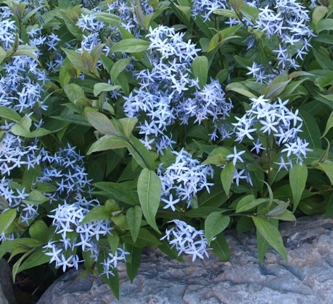
Amsonia — a genus of about twenty species, native to temperate climates in North America, Europe, and Asia. Named for Charles Amson, a U.S. traveler-scientist who lived in the 18th century. The latest taxonomical wisdom places them in the apocynaceae family, which they share with several hundred other genera, including Asclepias and Vinca. The plants, while commonly featured in books about perennials, don't usually make it to the top of must-grow lists — but perhaps they should. As is often the case, this page started because I was eager to learn a little more about a few of the plants growing in our garden. The species we grow have many similarities — the differences are most apparent when they are contrasted side by side on a dedicated page. Compared to other genuses in our garden, for which I have lots of material, amsonia is less represented: we grow only a few species/varieties, most of which are native to the United States. CultivationIn my experience, amsonias are slow to get going in the garden — but once they are established, they stick around, growing more robust (but not spreading too much) year after year. They certainly don't seem to mind our clay-based soil. While none of ours are planted in areas that get parched, I've never seen them wilt even during dry spells, so I judge them fairly drought-tolerant. The amsonias in our garden are all planted in fairly open areas, receiving full sun to part shade. The ones that get a little more shade bloom a little less, so full sun is probably best. Due to their milky sap, amsonias are often bypassed by foraging mammals, which makes them somewhat resistant to deer and other pelted pests. Propagation
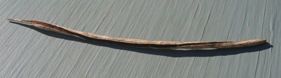
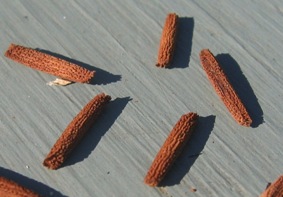
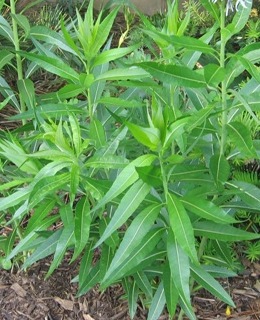
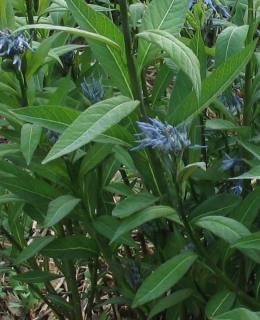
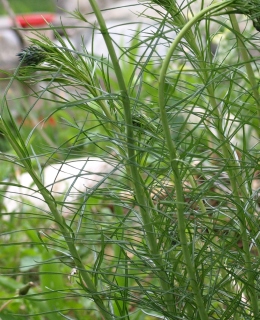
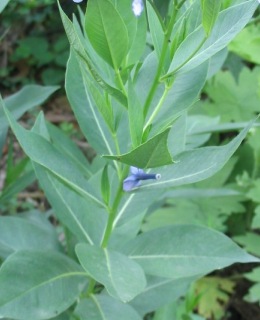
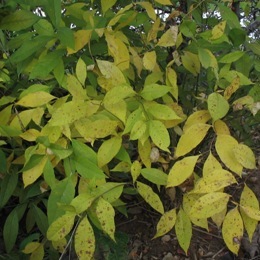
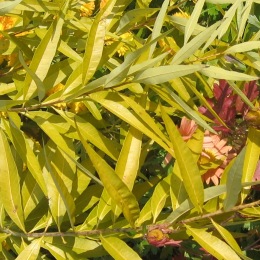
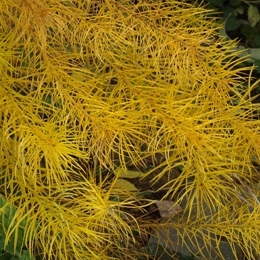
Amsonias have some of the funniest-looking seeds around — the seed pods are long tubes that are filled with cylindrical brown seeds arranged end-to-end. When you first see them, it appears as if you've inadvertently broken a "whole" seed into a bunch of fragments — but indeed each cylinder is a seed. The seeds ripen in the middle of fall — quite a long time after the plants bloom. I harvest them when the pods are quite dry and tan in color, but before they split apart lengthwise to drop their seeds. For the ones we grow, that's in October and November. Germination can be a little tricky, especially for the inexperienced seed-starter (as I was, when I first tried). My first attempts were with A. tabernaemontana; I remember trying to start them indoors, having no luck, and finally, having just about given up, setting the cell-pack in my unheated greenhouse (RIP) in early spring. A few weeks later, the seeds germinated nicely — the resulting plants still grace our garden. I now know that amsonia do best with an extended cold period — 8-10 weeks seems to do the trick — before germination at room temperature. I also realized recently that the final stage of germination sometimes requires somewhat warmer than room temperature, so I've started providing some bottom heat this year, with great results. I've had good luck with the baggy method, as well as with winter-sowing in November. Some sources also suggest to soak the seed overnight, but I've not found this to be necessary. Since the plants don't spread out much, and stay put as a healthy clump, they do not require division for good performance. But they can be divided in spring, as a means of propagation. Leaf shapesFor most of the year, the leaves and branching structure provide the best clues to tell the different species apart. The flowers are, at least superficially, more similar, as are the seedpods. So let's start with the leafy material. The three species growing in our garden are shown in three pictures below.
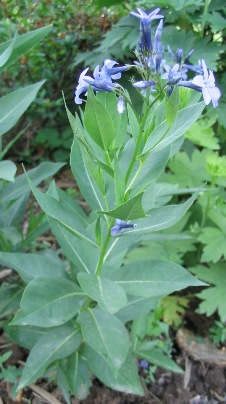
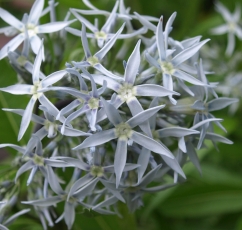
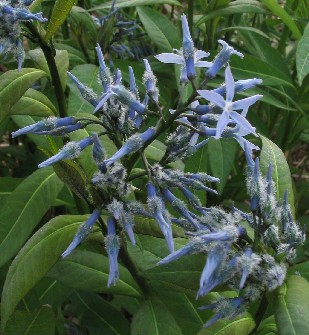
Flowers and seedpodsI've not been so diligent just yet taking photos of all the species. The ones on 'Blue Ice' are shown at right; my photos of two species are shown below, but not in a format that makes it easy to compare them. I'll venture out with my camera next spring and fill in the gaps.
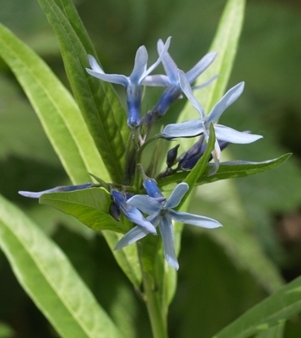
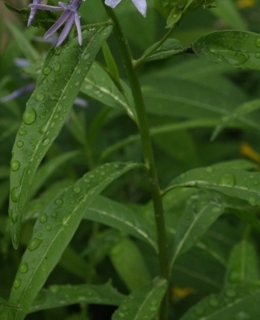
This is A. elliptica, again with fairly
similar flower shape. At least on our plant, the flowers don't cluster nearly as
densely as those on other species.
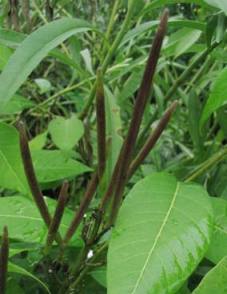
The seed pods are superficially similar — all the species in our garden hold them stiffly upright, and they mature to a tan brown. I'm pretty sure there are more subtle differences between the species (for example, both the pods and the seeds seem shorter and stubbier in tabernaemontana than in illustris and hubrichtii), but I haven't explored them systematically yet. The image at left shows pods for A. tabernaemontana.
Fall coloringAmong the gardenworthy characteristics of amsonia, brilliant fall foliage is often cited. Unfortunately, the first species to inhabit our garden, and apparently the easiest one to come by, was A. tabernaemontana, which is not a stellar performer in that respect. Some years, it colors up a bit — others, leaves just wither to a tan and drop. The same goes for 'Blue Ice', but the other species have more potential.
Other speciesA. orientalis is native to the Eastern Mediterranean. Its description sounds rather like that of species we grow, although the leaves are more gray-tinted. A United States native we don't yet grow is A. ciliata, whose description sounds most like our hubrechtii. Eventually, I figure we'll give most of them a try — and as we do, I'll update this page with all the latest information. Further readingAmsonia hasn't inspired many dedicated websites or pages, but there's a lot of information out there on the web about individual species. My PlantLinks page is not a bad place to start exploring. There's also a nicely illustrated article by Rich Darke (in PDF format) that highlights various species – including a few that I've yet to add to my collection. Visitors to this page have left the following comments
I welcome comments about my web pages; feel free to use the form below to leave feedback about this particular page. For the benefit of other visitors to these pages, I will list any relevant comments you leave, and if appropriate, I will update my page to correct mis-information. Note that I discard any comments including html markups, so please submit your comment as plain text. If you have a comment about the website as a whole, please leave it in my guestbook. If you have a question that needs a personal response, please e-mail me.
Last modified:
May 18, 2014
|
||||||||||||||||||||||||||||||||||||||||||||||||||||||||||||